
The book You Can Win by Shiv Khera is a very inspiring and motivational book. It teaches us how to build a positive attitude and develop the confidence to achieve success in life. The author believes that winners are not born different they just think and act differently. In the book, Shiv Khera uses simple stories, examples, and real-life experiences to explain how our thoughts and habits shape our future. He tells us that having good character, honesty, and hard work are more important than luck. The book also gives practical tips and small exercises to help us improve our attitude and achieve our goals. One of the main messages of the book is that success begins with self-belief. The author says that if we have faith in ourselves, we can overcome any obstacle. He encourages readers to think positively and take responsibility for their actions instead of blaming others or circumstances. Another important idea in the book is the value of discipline and determination. Shiv Khera explains that consistency and hard work are key to success. He gives examples of people who achieved great things because they never gave up, even when life became difficult. This motivates readers to stay strong and keep trying.
The book also focuses on moral values and ethics. The author believes that success without honesty and kindness is meaningless. He reminds us that true winners are those who achieve their goals without hurting others and who live with respect and integrity.The language of the book is easy to understand, and the stories are very interesting. It motivates the reader to believe in themselves and never give up. Overall, You Can Win is a wonderful book that teaches us how to stay positive, work hard, and become successful in life. It is a must-read for students, professionals, and anyone who wants to improve their attitude and achieve their dreams.
YOU CAN WIN : SHIV KHERA
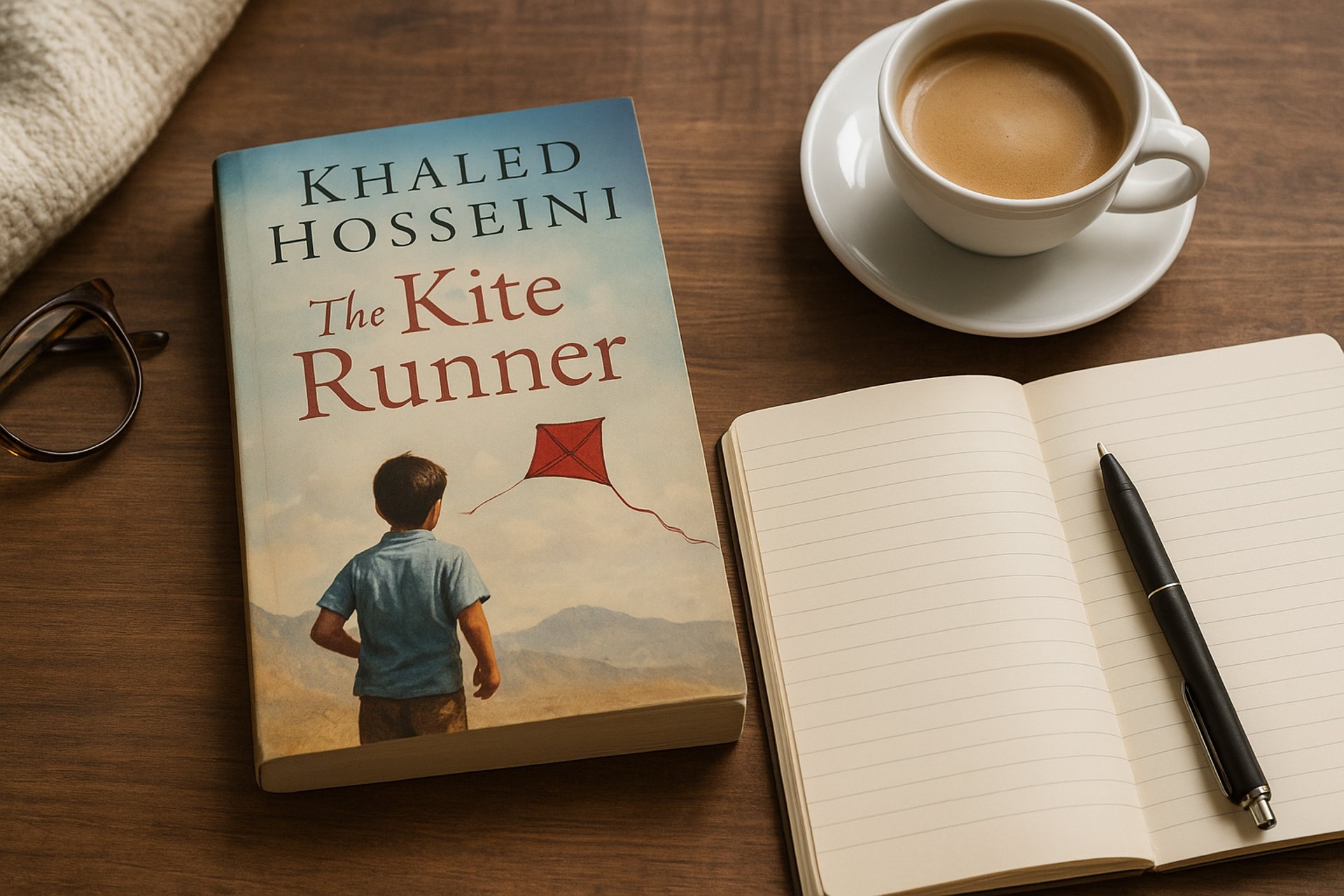
The Kite Runner by Khaled Hosseini is a deeply emotional novel that tells the story of Amir, a boy from a wealthy family in Kabul, Afghanistan, and his close friend Hassan, the son of their servant. Although they grow up together and share many happy moments—especially their love for kite flying—their friendship is shaped by differences in class, ethnicity, and privilege. Amir is a Pashtun, belonging to the upper class, while Hassan is a Hazara, a poor and often discriminated ethnic group. Amir is intelligent but insecure, always seeking the approval of his father, Baba, a strong and respected man who values courage and honesty. Baba, though loving, struggles to connect with Amir because he thinks his son lacks bravery. On the other hand, Hassan, despite being uneducated, is pure-hearted, loyal, and brave. He would do anything for Amir, famously saying, “For you, a thousand times over.” Their bond, however, is broken one winter day after the kite-flying competition. Amir wins the contest and hopes it will make his father proud, but when Hassan runs to retrieve the last kite as a trophy, he is attacked by a local bully named Assef. Amir witnesses this but is too afraid to help, and his silence fills him with shame and guilt. Unable to face Hassan afterward, Amir frames him for stealing, causing Hassan and his father, Ali, to leave Baba’s house, ending their friendship forever.
Years later, the Soviet invasion forces Amir and Baba to flee to the United States, where they start a new life in California. Baba works at a gas station and eventually dies of cancer, leaving Amir to build a future on his own. Amir becomes a writer and marries Soraya, but his guilt over Hassan never leaves him. One day, he receives a call from Rahim Khan, Baba’s old friend, asking him to return to Pakistan. There, Amir learns shocking truths—that Hassan was actually his half-brother, Baba’s illegitimate son, and that Hassan and his wife had been killed by the Taliban. However, Hassan left behind a son, Sohrab, who is now living in an orphanage in Kabul. Determined to redeem himself, Amir returns to Taliban-controlled Afghanistan to find Sohrab. He discovers that Assef, the same bully from his childhood, has taken the boy. In a brutal and emotional confrontation, Amir fights Assef and nearly dies, but Sohrab saves him with a slingshot—the same way Hassan once protected Amir as a child. Amir then brings Sohrab to Pakistan, but the boy is traumatized and quiet after all he has suffered. After many struggles, Amir manages to bring Sohrab to the United States and begins caring for him like his own son. In the final scene, during a kite-flying festival, Amir runs a kite for Sohrab, repeating the words once said by Hassan: “For you, a thousand times over.” This moment symbolizes forgiveness, healing, and the redemption Amir had been seeking all his life.
Through unforgettable characters like Amir, Hassan, Baba, Rahim Khan, and Sohrab, The Kite Runner explores deep themes of friendship, betrayal, guilt, social inequality, and the possibility of redemption. Hosseini paints a vivid picture of Afghanistan’s culture, beauty, and pain, showing how personal and political conflicts intertwine. Each character represents a moral lesson—Amir’s journey teaches that it is never too late to make amends, Hassan embodies loyalty and kindness, Baba represents strength and pride mixed with hidden flaws, and Sohrab reflects the innocence that survives even in the face of suffering. Overall, The Kite Runner is a heartbreaking yet hopeful story that shows the power of love, forgiveness, and the courage to face one’s past.
KITE RUNNER : by Khaled Hosseini

The Alchemist by Paulo Coelho is a beautifully written novel about dreams, destiny, and the journey of self-discovery. The story follows Santiago, a young shepherd from Spain, who dreams of finding a hidden treasure near the pyramids of Egypt. Believing that his dream has a special meaning, he decides to leave behind his simple life and set out on an adventure to find the treasure. This marks the beginning of an inspiring journey filled with lessons about life, faith, and the importance of listening to one’s heart.
During his travels, Santiago meets many people who change the course of his life. A gypsy woman helps him understand his dream, a wise king named Melchizedek teaches him about pursuing his “Personal Legend,” and a crystal merchant shows him the value of hard work and determination. Later, Santiago meets Fatima, a desert woman who teaches him about true love, and the Alchemist, who helps him understand the deeper spiritual truths of the world. Each encounter teaches Santiago something important, guiding him closer not only to his treasure but also to his own inner wisdom.
As Santiago’s journey unfolds, he realizes that the true treasure is not just gold or riches but the knowledge, courage, and growth he gains along the way. The novel reminds readers that every person has a unique purpose in life, and that dreams can come true if we have the faith to follow them. Coelho’s simple yet poetic writing makes the story easy to read and deeply meaningful.
The Alchemist is more than just a story about a shepherd; it is a story about all of us who are searching for meaning and purpose. It teaches that life’s real magic lies in believing in ourselves and in listening to the voice of our hearts. This book is inspiring, thought-provoking, and full of hope, leaving readers with a message that dreams are worth chasing and that sometimes, the journey itself is the greatest treasure of all.
THE ALCHEMIST BY PAULO COELHO
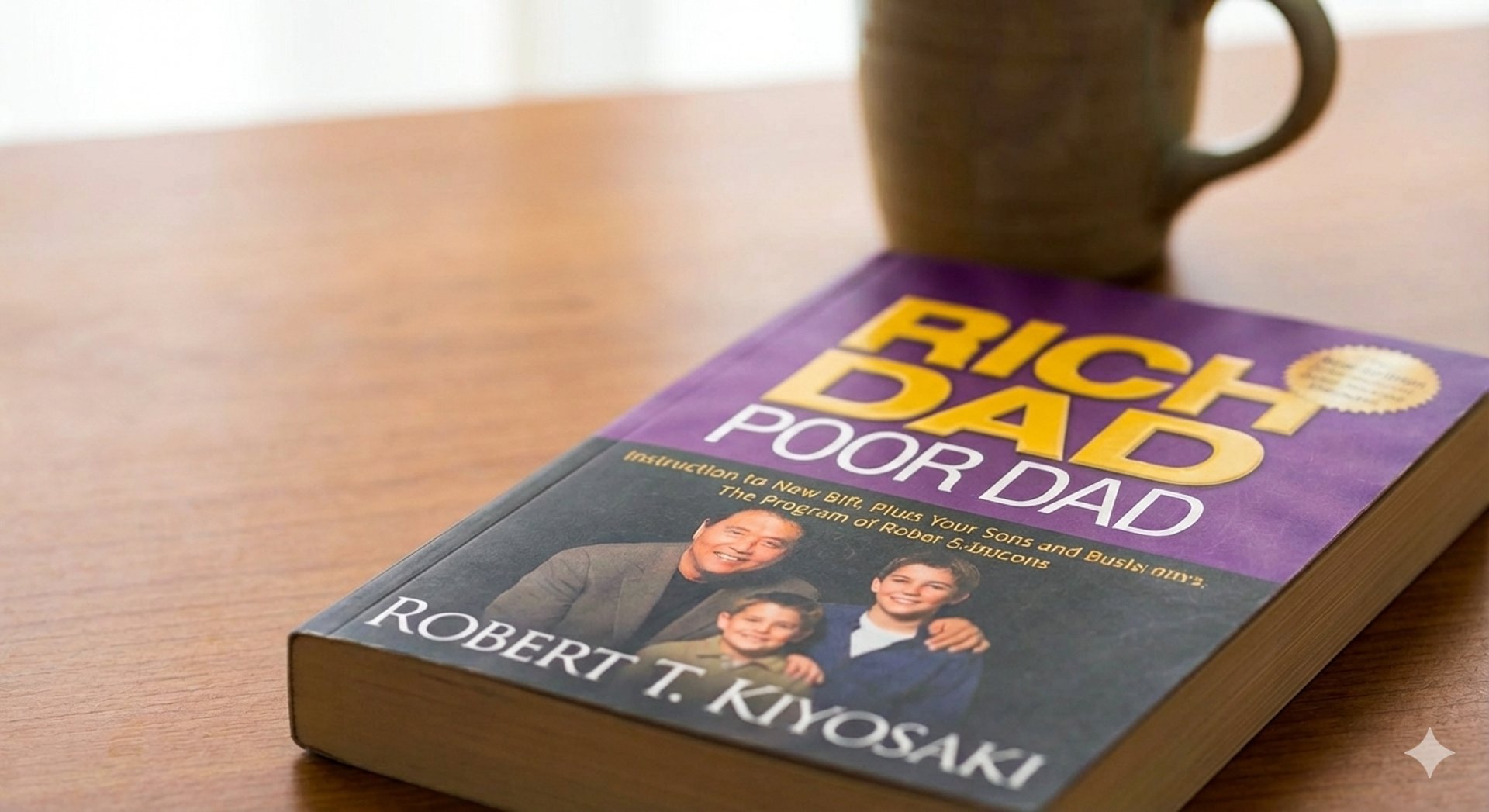
Rich Dad Poor Dad is a well-known personal finance book written by Robert Kiyosaki. The book focuses on changing the reader’s mindset about money, wealth, and financial independence. It explains that success in life does not depend only on formal education or a high-paying job but on understanding how money works.
The book is based on the author’s experiences with two father figures—his real father, referred to as the “Poor Dad,” and his friend’s father, called the “Rich Dad.” The Poor Dad believes in job security, academic excellence, and stable income, while the Rich Dad believes in financial education, investing, and entrepreneurship. These contrasting viewpoints form the foundation of the book.One of the most important lessons in the book is the difference between assets and liabilities. According to Kiyosaki, assets generate income, while liabilities create expenses. He explains that wealthy people focus on acquiring assets such as businesses and investments, whereas poor and middle-class people often spend money on liabilities while assuming they are assets.The author strongly emphasizes the importance of financial education. He argues that schools teach students how to work for money but not how to manage it. Understanding concepts like cash flow, taxes, savings, and investments is essential for achieving long-term financial stability and independence.
Kiyosaki also highlights the role of mindset and risk-taking in building wealth. He explains that fear of failure and lack of confidence prevent many people from becoming financially successful. The book encourages readers to take calculated risks, learn from mistakes, and continuously improve their financial knowledge.The writing style of the book is simple, direct, and engaging. Real-life examples are used to explain financial ideas, making the content easy to understand for beginners. Although some ideas are repeated, the repetition helps reinforce the key lessons.In conclusion, Rich Dad Poor Dad is an inspiring and thought-provoking book that challenges traditional beliefs about money and success. While it does not provide detailed financial plans, it successfully motivates readers to think differently and take control of their financial future. The book is highly recommended for students, young adults, and anyone interested in financial independence.
RICH DAD POOR DAD BY ROBERT T KIYOSAKI

The Day I Stopped Drinking Milk is a nonfiction collection by Sudha Murty that presents real life experiences drawn from her personal journey and social work. Sudha Murty is an Indian writer engineer and philanthropist associated with the Infosys Foundation and is known for her simple yet thought provoking storytelling that highlights human values and social realities.
The book consists of short reflective essays each centered on an incident that leads to a moral or emotional realization. The title essay uses an everyday experience involving milk to expose deeper issues of poverty privilege and empathy. Through ordinary moments the author connects personal experiences with larger societal concerns in a gentle and relatable manner.
The main themes of the book include compassion social responsibility humility and lifelong learning. Sudha Murty emphasizes the struggles of marginalized people and shows how often society overlooks them. She also reflects on her own mistakes and assumptions conveying that true wisdom comes from self awareness openness and a willingness to learn from life.
The key learning of the book is that small experiences can lead to powerful insights if approached with sensitivity and reflection. It encourages readers to be more observant kind and socially conscious in daily life. The book ultimately reminds us that personal growth and ethical living are closely linked to empathy and simple acts of understanding.
THE DAY I STOPPED DRINKING MILK SUDHA MURTHY
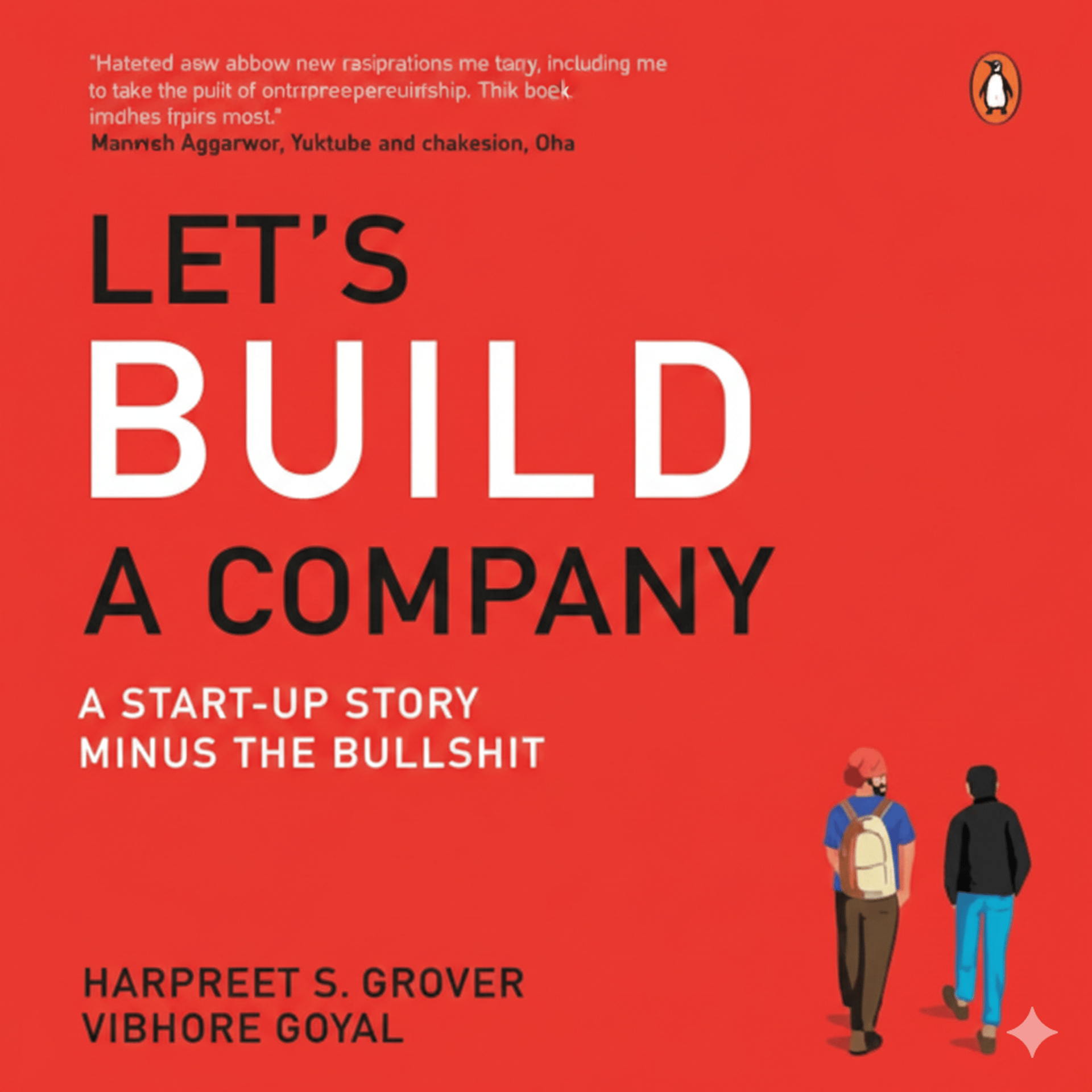
Let’s Build a Company is a practical and honest guide to entrepreneurship written by Harpreet S Grover and Vibhor Goyal. Both authors are experienced startup founders who have worked closely with early stage companies and investors. Their combined experience in building businesses from scratch gives the book strong credibility and makes it especially relevant for aspiring entrepreneurs and young professionals interested in the startup ecosystem.
The book is written in a straightforward and conversational tone and is structured around the real journey of building a startup. Instead of romanticizing entrepreneurship the authors focus on what actually happens behind the scenes. They discuss idea validation team building fundraising product market fit scaling and failures with clarity and realism. The subtitle start up story minus the bullshit accurately reflects the authors intention to strip away myths and present entrepreneurship as it truly is challenging uncertain and demanding.
The main theme of the book is practical execution over hype. The authors emphasize that success in startups depends more on discipline resilience and decision making than on flashy ideas. They highlight the importance of understanding customers managing cash flow building the right culture and learning quickly from mistakes. The book also stresses ethical leadership and long term thinking showing that shortcuts and ego driven decisions often lead to failure.
The key learning from Let’s Build a Company is that entrepreneurship is not about overnight success but about consistent effort and informed choices. The book teaches readers to be realistic prepared and adaptable while building a business. It serves as a valuable handbook for first time founders by offering clear insights actionable advice and hard truths that can help avoid common startup mistakes and build sustainable companies.
LET'S BUILD A COMPANY Harpreet S Grover and Vibhor Goyal

Atomic Habits is a practical and insightful book that explains how small daily actions can lead to significant long term improvement. Instead of promoting drastic change, the book focuses on consistency and the compounding effect of tiny habits. James Clear presents habit building as a system focused process rather than a goal focused one, making the book especially helpful for readers who struggle with motivation and follow through.
James Clear is a writer and speaker known for his work on habits, behavior change, and continuous improvement. His interest in habit formation grew after recovering from a serious sports injury, where small disciplined routines played a major role in his progress. His ability to combine behavioral science with real life examples makes his ideas easy to understand and apply.
The central theme of the book is that habits shape identity. Clear explains that lasting change occurs when people focus on becoming the kind of person they want to be rather than only achieving results. Habits and identity influence each other in a continuous cycle. The book also introduces the four laws of behavior change which explain how habits are formed and maintained through cues, cravings, responses, and rewards.
A major learning from the book is that environment matters more than willpower. Clear shows that designing surroundings to support good habits makes success easier and more natural. Readers also learn the value of habit stacking, tracking progress, and being patient with results, as meaningful change often appears slowly before becoming visible.
Overall, Atomic Habits is a clear, motivating, and practical guide to personal growth. Its simple strategies can be applied to health, work, and everyday life, making it especially useful for anyone seeking sustainable self improvement without feeling overwhelmed.